
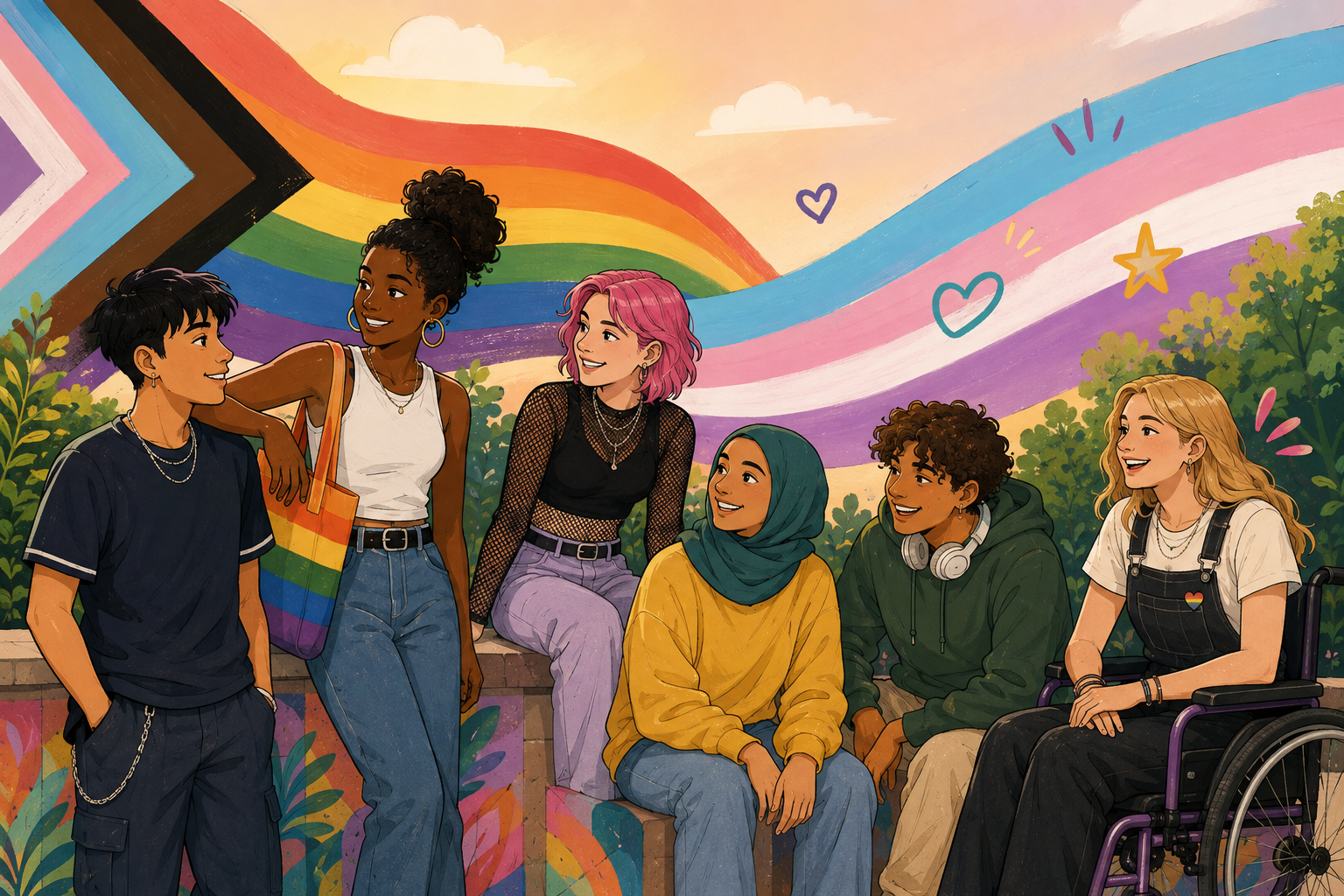
Sexuality and Gender

Everyone experiences romantic and sexual feelings differently. Some people like women, some like men, some like both, some like nobody at all, and some like people of any gender. Some people aren’t sure who they like yet — and that’s completely okay.
Sexuality is a normal part of being human. Your feelings are real, valid, and nothing to be ashamed of.
There is no rule for how you “should” feel.
There is no timeline for figuring things out.
You don’t have to rush. You don’t have to label yourself if you’re not ready.
Your sexuality is yours. Only you get to decide what feels right.
-
Some people “just know” they aren’t straight.
Some figure things out slowly over time.
Some change how they identify as they grow.All of these experiences are real and okay.
You might want a label — lesbian, gay, bisexual, pansexual, queer — or you might prefer no label at all. Both are valid.
Nobody else can tell you who you are.
If you say you’re gay, bi, ace, pan, queer — that’s your identity.
If you’re not ready to say it out loud, that’s okay too. -
We live in a world where many people assume everyone is straight. This is called heteronormativity — the idea that being straight is somehow the “default.”
Because of this, you might:
Worry about what others think
Feel nervous about expressing yourself
Fear being judged or misunderstood
Worry about homophobia or negative reactions
Feel “different” or unsure
None of these feelings mean something is wrong with you.
They mean society still has a lot of growing to do.If you’re feeling unaccepted, confused or alone, talking to others with similar experiences or reaching out to a trusted adult can really help.
-
You deserve to feel safe and supported.
You can talk to:
A trusted adult
A friend who understands
A teacher or counsellor
A youth worker
Local LGBTQ+ support groups or youth spaces
Speaking to people who understand what you’re going through can help you feel less alone and more confident in who you are.
-
What Is Gender?
Gender is one way people understand and express themselves in the world.
It’s different from biological sex, which refers to the body you are born with (male, female or intersex).Gender is about:
How you feel inside
How you express yourself
How you see yourself
What feels right for you
Some people identify as male or female.
Some people are non‑binary.
Some are gender‑fluid.
Some are questioning.
Some don’t feel connected to gender at all.There isn’t one “right” way to be.
-
These are two different things:
Gender Identity
Your internal sense of who you are (male, female, non‑binary, trans, agender, etc.)
Gender Expression
How you show your gender on the outside (clothes, hair, voice, style).
You can express yourself however feels comfortable — masculine, feminine, a mix, or something else entirely.
Gender expression does not determine your sexuality.
-
Some people are born with a mix of male and female traits in their body.
This is called being intersex.
It’s completely natural — just another way human bodies exist.Intersex people may be raised in the way their parents choose, but only the individual can decide how they identify later in life.
-
For many people, gender isn’t something they think about much. But for others, their gender identity is deeply important.
Some young people:
Feel uncomfortable with their body
Feel their gender doesn’t match the sex they were assigned at birth
Feel pressure to “act” a certain way
Wish they were seen as a different gender
Feel unsure and want time to explore
Don’t feel like they fit into “male” or “female” boxes
This doesn’t mean anything is “wrong.”
It means they are discovering who they are — and that takes honesty, time, and support. -
If someone feels strong discomfort or distress because their body doesn’t match their gender identity, they might be experiencing gender dysphoria.
This can look like:
Disliking or rejecting certain body parts
Feeling “trapped” in the wrong body
Feeling distressed by puberty changes
Wanting to be seen as another gender
Feeling desperate for others to understand
If these feelings sound familiar, please speak to a trusted adult as soon as you feel able. You deserve support and understanding.
-
Your gender identity and sexuality are unique to you.
There is no right or wrong way to exist.What matters most is:
You feel safe
You feel supported
You can talk openly if you choose
You know there is nothing wrong with how you feel
You understand that you deserve respect, always
You are allowed to explore.
You are allowed to change.
You are allowed to be exactly who you are.And you never have to figure it out by yourself.
Resources
It Gets Better - LGBT Youth Scotland, Young People
What is a Woman? - Defining Gender Identity