
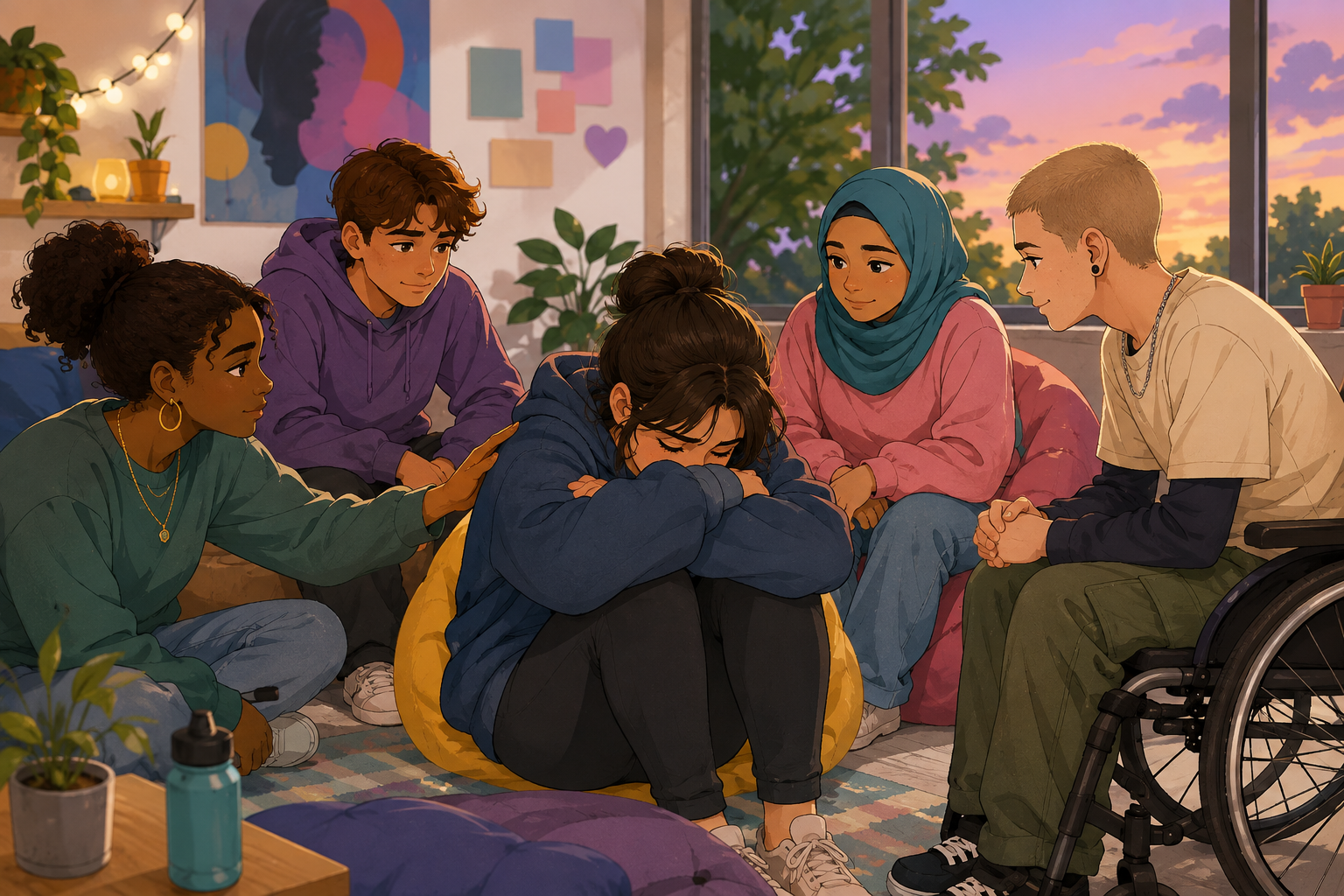
Self-Harm & Self-Injury

Self‑harm is when someone hurts themselves on purpose as a way of coping with difficult thoughts or feelings.
It doesn’t mean you want to die.
It doesn’t mean you’re “attention‑seeking.”
And it doesn’t mean you’re broken.
Self‑harm is usually a sign that someone is struggling to deal with overwhelming emotions like sadness, stress, anger, guilt, loneliness, or feeling out of control. If this is something you’re experiencing, you deserve support — not judgement.
You are not alone, and you are not a burden.
There is help, and things can get better.
-
People self‑harm for different reasons, including:
Trying to release emotional pain
Feeling numb and wanting to feel something
Feeling guilty or angry with themselves
Wanting to feel in control
Coping with stress, pressure, or trauma
Feeling overwhelmed or hopeless
Using it to block or distract from difficult memories
Managing feelings that feel “too big”
These reasons don’t make you weak — they show that you’re struggling and need support.
-
You might notice:
Hiding how you feel
Feeling low, anxious, or numb
Feeling a heavy sense of pressure or sadness
Wanting to be alone
Thoughts of hurting yourself
Feeling overwhelmed by small things
Constant overthinking
Feeling out of control emotionally
These are signs that you need care, support, and someone to talk to.
-
You deserve help immediately.
Talking to someone can feel scary, but it’s the bravest thing you can do.Try telling:
A parent or carer
A trusted adult
A teacher or school counsellor
A youth worker
A close friend you trust
A GP or health professional
You don’t have to explain everything.
You can simply say:
“I’m not coping.”
Or
“I’m having thoughts about hurting myself.”That is enough.
-
These won’t fix everything overnight, but they can help you get through the moment safely while you reach out for support:
Distract your mind
Watch something familiar or comforting
Play a game
Call a friend
Put on music
Do something creative
Soothe your emotions
Wrap yourself in a blanket
Hold something soft
Have a warm drink
Light a scented candle (if safe)
Practice slow breathing
Release tension safely
Squeeze ice
Rip paper
Punch a pillow
Go for a walk
Stretch or move your body
Express what’s going on
Write down your thoughts
Draw how you feel
Record a voice note
Talk to someone you trust
These are temporary supports — you still deserve real help from people who can support your wellbeing long‑term.
-
If you’ve already hurt yourself, you still deserve help, compassion, and support.
You can:
Clean any wounds gently if it’s safe
Tell someone what happened
Seek medical help if needed
Talk to a trusted adult or youth worker
Be kind to yourself — shame makes healing harder
You are not “in trouble.”
You deserve care. -
Self‑harm might feel like the only way to cope right now, but it can become a cycle that gets harder to break.
Support helps you:Understand your emotions
Learn safer coping strategies
Feel less alone
Build confidence and resilience
Heal emotionally and physically
You never have to face this by yourself.
-
A parent or carer
A trusted friend
A teacher or school counsellor
A youth worker
A GP or nurse
A mental health professional
If you’re scared to talk, you can write it down or ask someone to help you start the conversation.
You deserve support — not judgement.
-
If someone you know is self‑harming:
Listen without judging
Encourage them to talk to an adult
Stay calm
Don’t promise to keep it a secret if they’re in danger
Look after yourself too
You can care about others, but you are not responsible for “fixing” anyone.
Just being there matters more than you know.
How I overcame self harm | BBC Ideas