
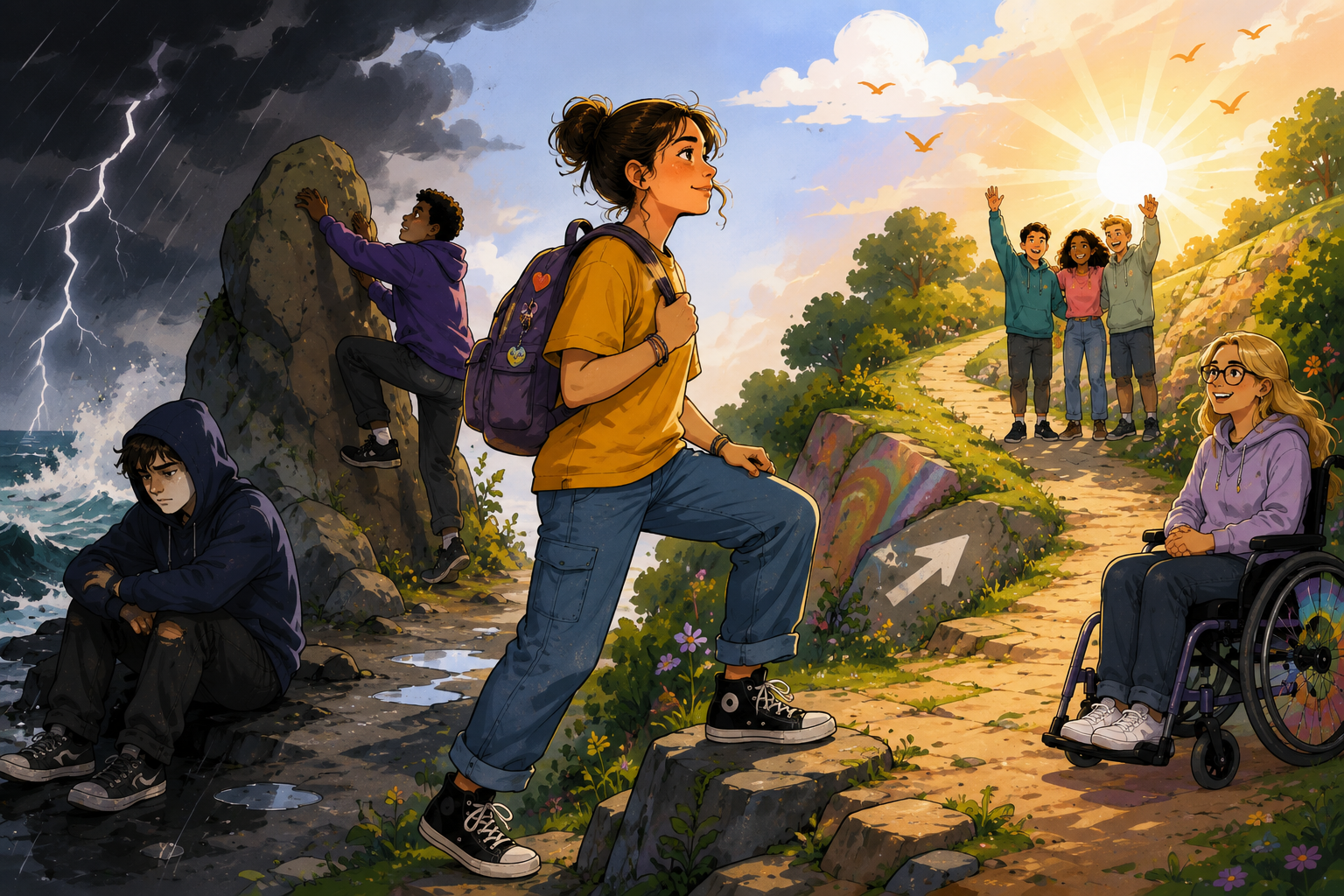
Resilience & Coping Skills

Resilience is your ability to cope with challenges, bounce back when things go wrong, and keep going even when life feels tough.
It doesn’t mean you have to be positive all the time. It doesn’t mean you never get upset. And it definitely doesn’t mean you have to deal with everything on your own.
Being resilient simply means learning ways to handle difficult situations, look after yourself, and trust that things can get better — even if it takes time.
Resilience is a skill, not a personality trait.
And all skills can be learned.
-
Life can throw a lot at you: school pressure, friendships changing, family stress, online drama, big feelings, or just everyday ups and downs.
Resilience helps you:Feel more confident in yourself
Manage stress better
Recover after setbacks
Stay calm in tough situations
Make healthier choices
Build stronger relationships
Look after your mental wellbeing
You don’t have to be “strong” — you just need tools to help you cope.
-
You might be dealing with things like:
Falling out with friends
Struggling at school
Feeling down, stressed, or overwhelmed
Family problems
Body image worries
Peer pressure
Online or social media drama
Feeling isolated or unsure of yourself
Whatever you’re facing, your feelings matter — and you deserve support.
-
Coping skills help you deal with stress, emotions, and difficult situations in safe, positive ways.
Here are some that really help:
✅ 1. Talk About It
Sharing how you feel with someone you trust can make huge problems feel smaller.
✅ 2. Take Breaks
You don’t have to push through everything. Breaks help your brain reset.
✅ 3. Move Your Body
Walking, dancing, stretching or sports release stress naturally.
✅ 4. Focus on Your Breathing
Slow breaths calm your nervous system and help you think clearly.
✅ 5. Do Something Enjoyable
Music, gaming, art, reading, cooking — anything that helps you decompress.
✅ 6. Write It Down
Journalling or brain‑dumping your thoughts can make sense of your emotions.
✅ 7. Reach Out
A youth worker, teacher or friend can help you see things differently.
✅ 8. Be Kind to Yourself
Talk to yourself the way you would talk to someone you care about.
-
Resilience grows when you practice small habits regularly:
✅ Stay Connected
Keep in touch with people who support and uplift you.
✅ Set Realistic Goals
Small steps are still progress.
✅ Learn From Setbacks
Ask yourself: “What can this teach me?”
Not: “What’s wrong with me?”✅ Celebrate Wins
Even tiny victories count.
✅ Create Healthy Routines
Sleep, food, movement and downtime keep your brain strong.
✅ Limit Negative Influences
Social media accounts, people or situations that drain you can make everything harder.
-
You might feel:
Easily overwhelmed
Irritated or emotional
Exhausted or drained
Like you can't cope
Low or hopeless
Withdrawn from friends
Pressured by school or home life
Stuck in your thoughts
These are signals your mind needs support — not that you’re failing.
-
Reaching out is a brave and powerful step. You can speak to:
HSIS Youth Workers
A teacher or pastoral support
A parent or carer
A trusted friend
Your GP
A school counsellor
A mental health professional
You never have to deal with difficult feelings alone.
-
If you ever feel:
Out of control
Like you might hurt yourself
Scared by your thoughts
Unable to cope
Please speak to a trusted adult as soon as possible.
Asking for help is a sign of strength — not weakness. You deserve support, safety and care.
Building stress resilience
Resources
Three invaluable tools to boost your resilience | BBC Ideas