
Mental Health

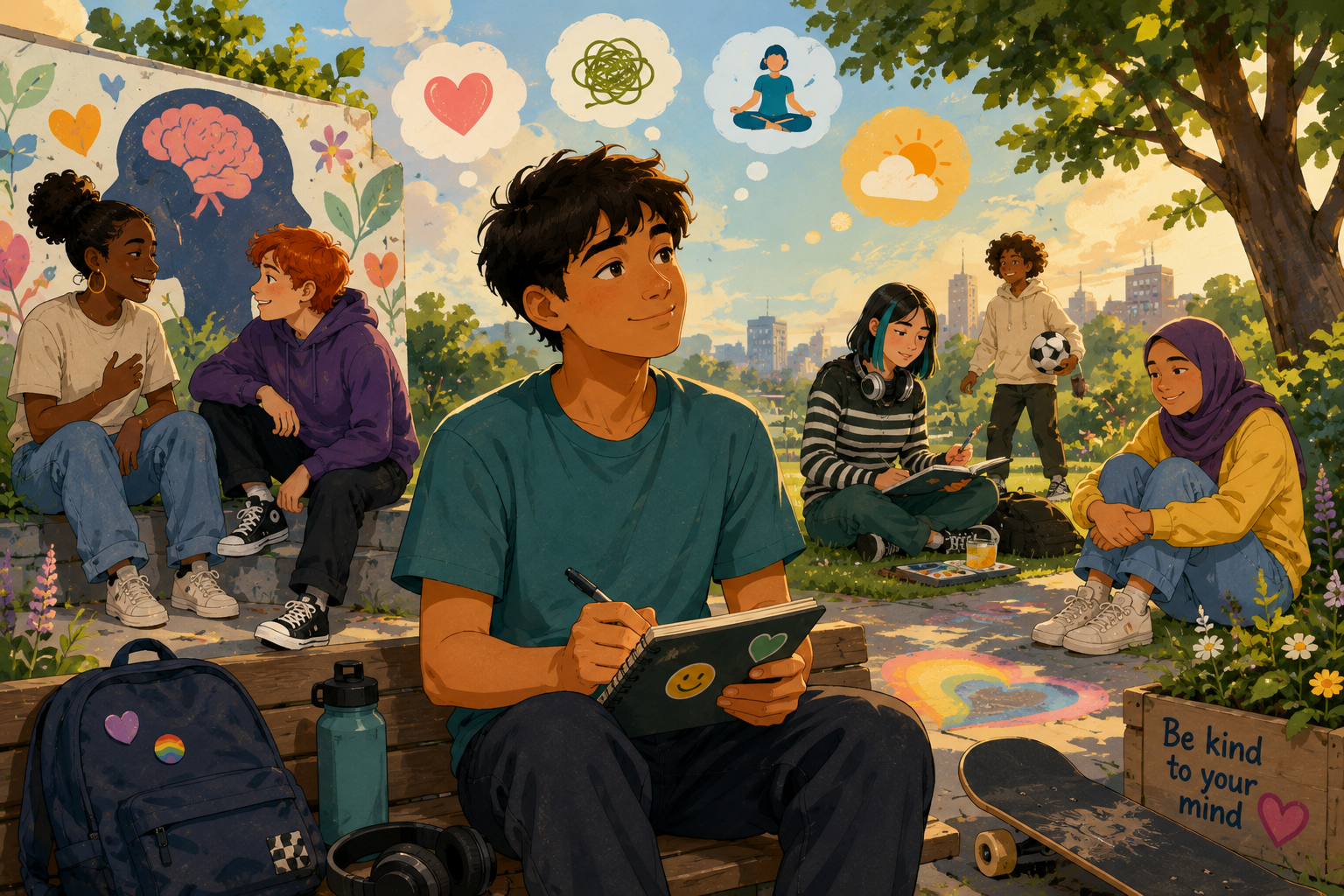
Mental health is about how you think, feel, and cope with life. Everyone has mental health — just like physical health — and it can change from day to day. Feeling worried, stressed, sad, confused, or overwhelmed doesn’t mean something is wrong with you. It means you’re human.
Life brings challenges: school pressures, friendships, family changes, online stress, or just feeling unsure about who you are. Your mental health matters, and you deserve support, kindness, and space to feel how you feel.
-
You might notice:
Feeling sad or low
Worrying a lot or feeling on edge
Struggling to concentrate
Feeling tired or not sleeping well
Losing interest in things you used to enjoy
Feeling stressed or overwhelmed
Feeling angry or irritated
Wanting to be alone
Struggling with confidence or self‑esteem
These feelings are common — but if they last or make life harder, it’s important to reach out.
-
Good mental health helps you:
Cope with stress
Build healthy relationships
Make decisions and solve problems
Enjoy hobbies and try new things
Feel confident about who you are
Your mental health affects every part of your life — your body, friendships, school, sleep, and how you see yourself.
Taking care of it isn’t selfish. It’s essential.
-
School and Exams
Deadlines, revision, and pressure to “do well” can build up quickly.
Friendships & Relationships
Fallouts, breakups, or feeling left out can hit hard.
Family Issues
Arguments, changes at home, or stress in the family can affect your emotions.
Social Media
Comparing yourself to others or seeing perfect lives online can make you feel not good enough.
Identity and Self‑Esteem
Figuring out who you are can feel confusing, lonely, or stressful.
Body Image
Pressure to look a certain way can affect confidence and mood.
-
Here are some things that can help:
1. Talk About How You Feel
Sharing your thoughts with someone you trust can make you feel lighter.
You don’t have to explain everything — just starting the conversation is enough.2. Get Enough Sleep
Your body and mind need rest. Aim for 8–9 hours so you can feel calmer, clearer, and more energised.
3. Stay Active
Movement releases hormones that lift your mood. It doesn’t have to be sport — dancing, walking, stretching, or biking count too.
4. Do Things You Enjoy
Gaming, arts, music, reading, sports, cooking, hanging out with friends — fun helps your brain recharge.
5. Eat Regularly
Food fuels your brain. Skipping meals or living on snacks can affect your mood and energy.
6. Take Breaks From Screens
Online pressure can build up fast. Step away, stretch, breathe, and ground yourself.
7. Be Kind to Yourself
Talk to yourself the way you talk to a friend.
You deserve patience and kindness. -
Sometimes emotions build up until they feel impossible to manage alone.
You might:Cry more than usual
Feel numb or empty
Lose motivation
Find it hard to get out of bed
Feel hopeless or stuck
Have thoughts that scare you
These are signs that you need support — and reaching out is brave.
-
Parents or Carers – they know you best
Teachers & School Staff – trained to help
Youth Workers – safe, confidential support
Friends – someone your age may understand
School Counsellors – someone to talk to regularly
GP or Health Services – extra help if you’re struggling
You are never bothering someone by asking for help.
-
f someone you know is struggling:
Listen without judging
Encourage them to talk to an adult
Don’t carry everything on your own
Check in with them, but care for yourself too
You can’t fix everything — but you can make a huge difference by being there.
If you or the young person need immediate support, please call the 24/7 Urgent Mental Healthline: 0800 145 6485
In an emergency, please visit your nearest A&E or call 999
Click here to find out more
Resources
We All Have Mental Health
A 10-Minute Meditation for Stress from Headspace | Mental Health Action Day