
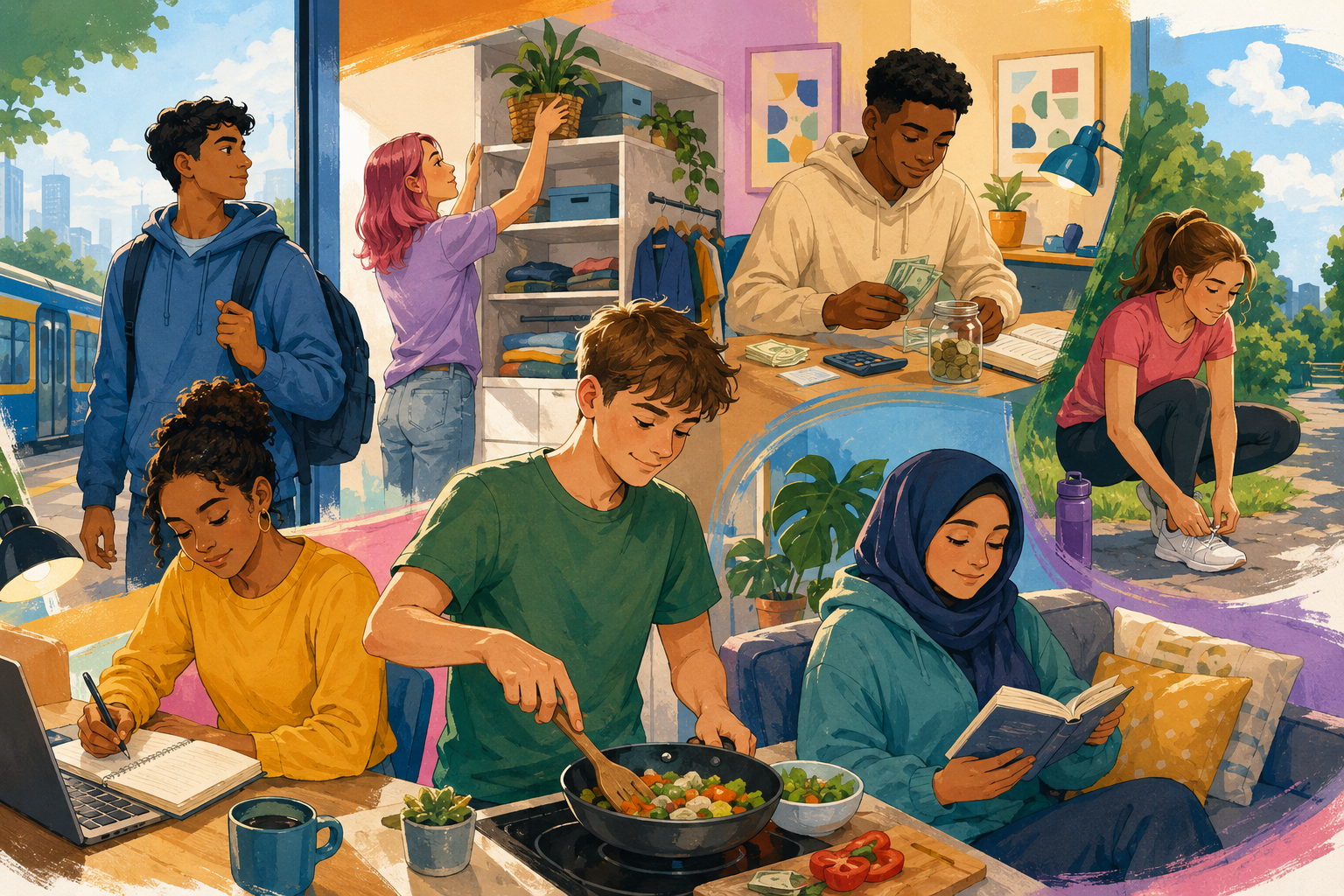
Life Skills & Independence

Life skills are the everyday abilities that help you look after yourself, stay organised, make good decisions, and feel confident as you move toward adulthood.
They’re not things you’re expected to magically know — they’re things you learn over time, through practice, support, and experience.
Life skills help you become more independent, but they also help you feel safer, calmer, and more in control of your day‑to‑day life.
Everyone learns at their own pace — and it’s okay if you’re still figuring things out.
-
Growing up means facing new challenges, like:
Managing your own time
Having responsibilities at home or school
Looking after your physical and mental wellbeing
Handling money or jobs
Planning for the future
Navigating new environments or relationships
Life skills help you:
Feel more confident
Solve problems
Make good decisions
Stay organised
Reduce stress
Take care of yourself
Move toward independence safely
These skills aren’t about “being an adult” — they’re about feeling prepared and capable.
-
✅ 1. Basic Home Skills
Things that help your day run smoothly:
Cooking simple meals
Washing clothes
Cleaning your space
Keeping things tidy
Knowing basic first aid
Shopping for essentials
Small habits like making your bed or organising your room can make a huge difference to your mood and focus.
✅ 2. Time Management
Learning to plan your day helps you feel less overwhelmed.
Try:
Keeping a simple timetable
Writing down homework and deadlines
Breaking tasks into small steps
Setting timers for focused work
Making space for rest and fun
Good time management reduces stress and gives you more control over your routine.
✅ 3. Money Skills
Understanding money early helps you avoid stress later.
This includes:
Setting a budget
Tracking your spending
Saving small amounts
Knowing how bank accounts work
Avoiding risky credit or quick loans
Recognising scams
Money confidence = life confidence.
✅ 4. Looking After Your Health
Taking care of your body and mind supports everything else.
Helpful habits:
Eating regular meals
Drinking water
Getting enough sleep
Staying active
Taking breaks
Asking for help when something feels wrong
Your wellbeing always comes first.
✅ 5. Communication & Social Skills
Life feels easier when you can:
Ask questions
Express yourself
Listen to others
Resolve conflicts
Set boundaries
Build healthy friendships
Good communication helps you feel connected and respected.
✅ 6. Decision‑Making
Independence comes with choices.
Decision‑making skills help you:Think before acting
Weigh up the pros and cons
Ask for advice when needed
Learn from past experiences
Take responsibility without blaming yourself
You don’t have to make perfect decisions — just thoughtful ones.
✅ 7. Coping With Change
Life changes can feel scary, but coping skills make them easier.
Things that help:
Talking about your feelings
Practising self‑care
Asking for support
Staying connected to people you trust
Taking one step at a time
You are stronger than you think.
-
You might not be thinking about moving out yet — but learning these skills now sets you up for:
College or sixth form
Part‑time work
Apprenticeships
Living with friends or family
Managing your own responsibilities
Feeling confident in adulthood
Nobody expects you to know everything.
Growing up is a journey — not a test. -
It’s okay if independence feels scary or confusing.
Lots of young people feel the same.You can learn these skills by:
Asking a youth worker
Watching someone you trust
Practising little bits at a time
Trying out tasks together (cooking, laundry, budgeting)
Making mistakes — it’s part of learning
Support is always available. You don’t need to figure everything out alone.