
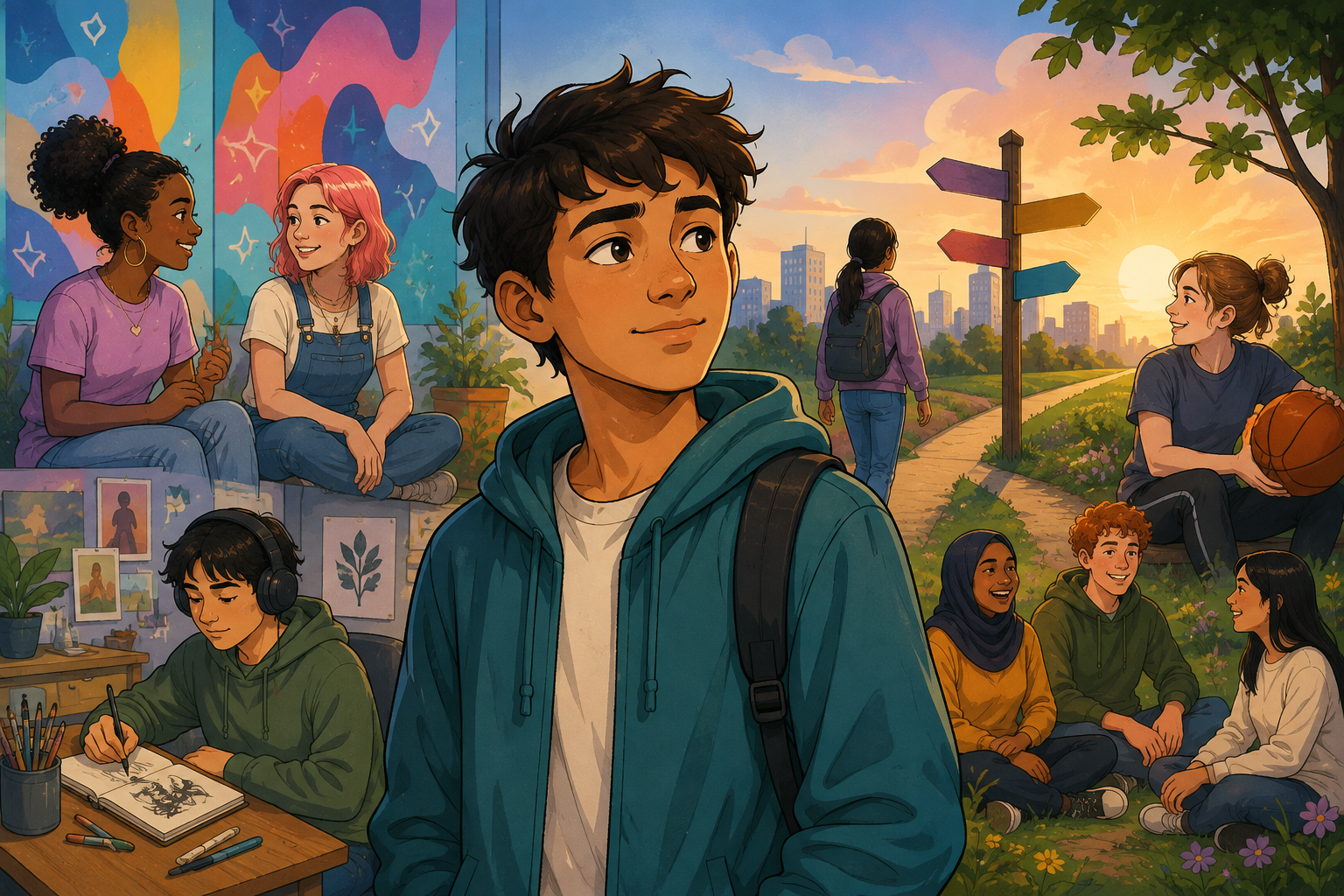
Identity & Life Changes

Your identity is everything that makes you you — your personality, values, beliefs, interests, culture, background, friendships, sexuality, gender, dreams, style, and the things that matter most to you.
Identity isn’t fixed. It grows, evolves, and shifts as you experience life, learn new things, and figure out who you want to be.
You don’t need to have yourself “all figured out.”
You’re allowed to explore.
You’re allowed to change.
You’re allowed to grow at your own pace.
-
Being a young person means you're navigating lots of changes at the same time:
Growing up
Friendships changing
New feelings and relationships
Family expectations
School pressure
Social media influence
Questions around your personality or future
Figuring out your sexuality or gender
Comparing yourself to others
It’s completely normal to feel unsure, stuck, or overwhelmed — identity isn’t something you decide once; it’s something you build over time.
-
You might experience changes such as:
Starting or leaving school/college
Moving house
Friendship fallouts
New relationships
Puberty and body changes
Parents divorcing or new family structures
Cultural or religious expectations
Losing someone important
Changes in mental health
Shifts in social groups
Getting your first job
These changes can shape how you see yourself — sometimes positively, sometimes in challenging ways.
-
You are not expected to have a clear identity yet. Exploring is part of growing.
✅ Try New Things
Hobbies, sports, creative projects, volunteering — each helps you learn what you enjoy.
✅ Learn What You Value
Kindness? Honesty? Creativity? Independence?
Your values shape who you are.✅ Notice What Shapes You
Your culture, community, passions, experiences, and relationships all contribute to your identity.
✅ Allow Yourself to Change
It’s okay if who you were last year isn’t who you are now.
✅ Stop Comparing Yourself
Identity isn’t a race. You don’t need to match anyone else’s timeline.
-
✅ Positive Influences
Supportive friends
Inspiring teachers or adults
Creative outlets
Cultural pride
Healthy social media spaces
Role models who uplift you
❌ Negative Influences
Toxic friendships
Social pressure
Online comparison
Bullying
Strict expectations
Fear of judgement
If something makes you feel small, trapped, or confused — it doesn’t define you.
You choose what becomes part of your story. -
Many young people feel like they don’t fit in.
This might look like:Feeling out of place at school
Having different interests from your friends
Feeling unsure about your future
Feeling disconnected from your culture or family
Not matching others’ expectations
Feeling “behind” compared to your peers
You don’t have to change who you are to belong.
The right people will like you exactly as you are. -
Life changes can feel scary — even positive ones.
Here are ways to cope:✅ Talk About It
Speak to a trusted adult, friend, teacher or youth worker.
✅ Give Yourself Time
Change feels weird at first. That doesn’t mean it’s bad.
✅ Keep Your Routines
Familiar habits make change easier to handle.
✅ Stay Connected
Friends, family, clubs or groups can help you feel grounded.
✅ Look After Your Mental Health
Sleep, food, movement and breaks help your mind adjust.
✅ Ask for Support
You don’t have to figure things out alone.
-
Feeling lost or unsure doesn’t mean you’re broken.
It means you're human.You may be struggling with:
Low confidence
Anxiety or overthinking
Confusion about sexuality or gender
Pressure to be someone you're not
Fear of disappointing others
Feeling invisible or misunderstood
These are signs to talk to someone who can help you feel more grounded and supported.
You can speak to:
A youth worker
School counsellor
Trusted adult
Teacher
GP
Support service
Resources
Who am I? A philosophical inquiry - Amy Adkins