
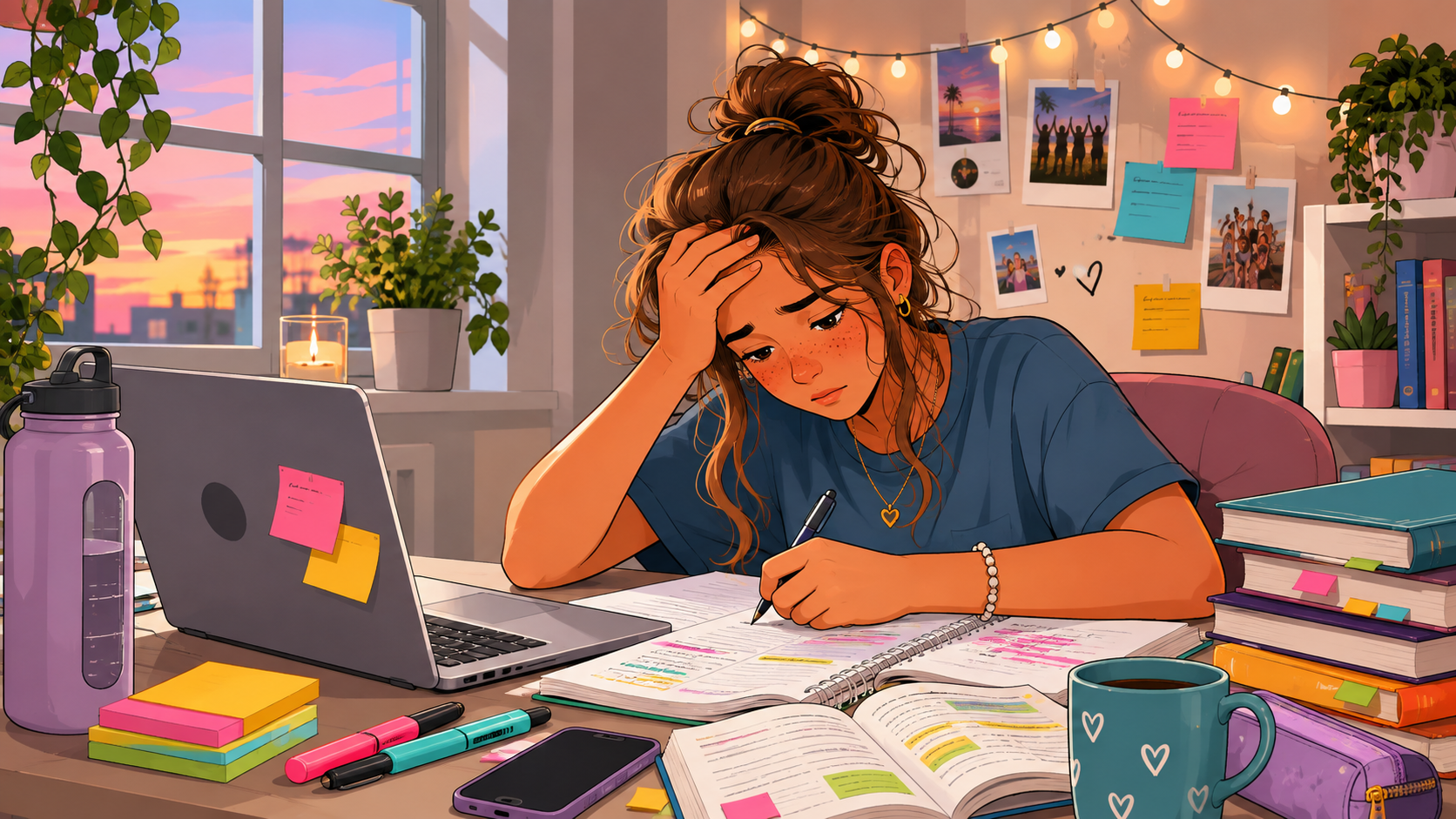
Exam Stress & Study Pressure

Exams can bring a lot of pressure — from teachers, parents, school, and even from yourself. You might feel worried about letting people down, scared of failing, or overwhelmed by how much work you need to do.
These feelings are normal, and they don’t mean you’re not capable. They mean you care.
Exams measure what you can remember on one day — not your worth, your personality, or your future potential.
-
You might notice:
Trouble sleeping
Feeling overwhelmed or on edge
Difficulty focusing or remembering things
Feeling tired or drained
Pressure headaches or stomach aches
Feeling irritated or emotional
Avoiding revision because it feels too much
None of this means you’re failing. It means you need support, not pressure.
-
Young people face lots of hidden pressures around exams, including:
🎓 Academic Pressure
Trying to meet grades, school expectations, or teacher comments.
👨👩👦 Family Pressure
Worrying about making parents proud or not disappointing them.
🧠 Internal Pressure
Your own desire to do well or perfectionist thinking.
👥 Social Pressure
Seeing friends revise differently, comparing yourself, or worrying about being “the only one” stressed.
🌐 Future Worries
Thinking exams decide your whole future — they don’t.
-
Not cramming — just small, manageable chunks.
Aim for 20–40 minutes, then take 5–10 minute breaks.✅ 2. Take Meaningful Breaks
You can’t revise non‑stop.
Do things you enjoy — music, gaming, fresh air, drawing — to reset your brain.✅ 3. Try Past Papers
They help you get used to timing and question styles.
✅ 4. Don’t Aim for “Perfect”
Aim for progress, not perfection.
Every bit of revision is a win.✅ 5. Look After Your Body
Sleep, food, hydration, movement — all make revision easier and help you cope emotionally.
✅ 6. Tidy Your Space
A calm environment helps your brain focus better.
✅ 7. Stay Connected
Don’t isolate yourself; talk to friends or family when you feel stuck.
-
Exam stress often brings unhelpful thoughts like:
“I’m going to fail.”
“Everyone else is doing better.”
“I’m not smart enough.”
“I can’t do this.”
Try challenging these thoughts:
“What’s the evidence I can’t do this?”
“I’ve gotten through tests before.”
“I don’t need to be perfect — I just need to try.”
“Everyone struggles sometimes.”
Your thoughts are not facts.
-
✅ Breathe Slowly
It calms your body and clears your mind.
✅ Read the Questions Carefully
Give your brain time to warm up.
✅ Start With Something You Know
Build confidence early.
✅ Don’t Panic if You Go Blank
Pause, breathe, move to another question, come back later.
✅ Remember: One Exam Won’t Define Your Life
It really won’t.
-
Try not to overthink what you wrote.
Avoid comparing answers.
Give yourself something to look forward to.
Focus on the next step, not the last mistake.
You deserve breaks and celebration — regardless of how you think you did.
-
Speak to:
A teacher or tutor
A school counsellor
HSIS Youth Worker
A trusted parent or carer
A friend you feel safe with
Asking for help isn’t weakness — it’s strength.
Video on understanding anxiety
Resources
Conquering exam stress: lessons from our bodies
Breathing Techniques Video
Tips for managing Anxiety