
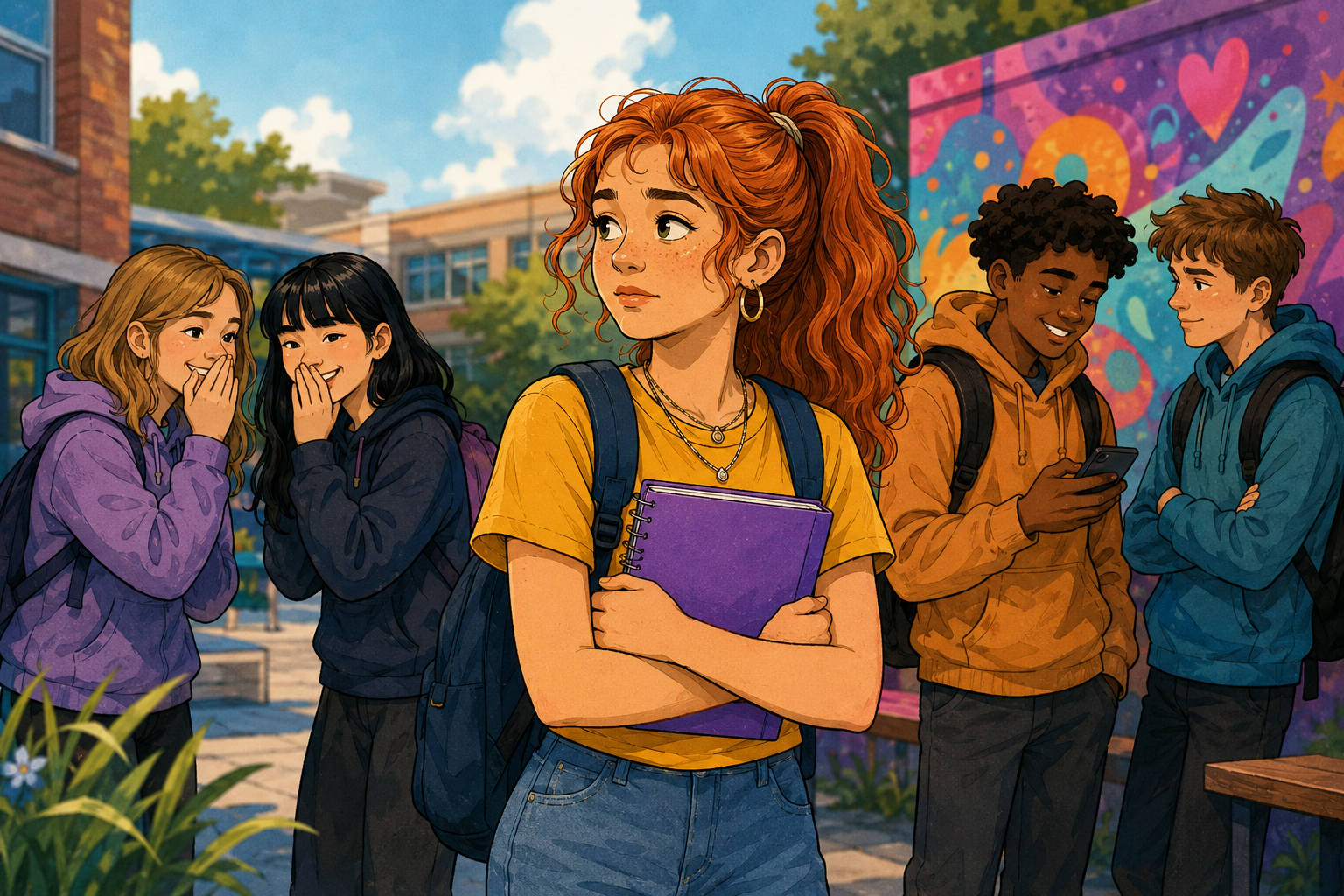
Bullying

Bullying is something many young people experience, but that doesn’t make it okay. It happens when someone hurts, scares, or puts another person down on purpose. Bullying can be physical, verbal, emotional, or online. It can leave you feeling worried, upset, or alone — but you’re not. Bullying is never your fault.
Bullying can make you feel small or powerless, but you deserve kindness and safety. You’re not to blame, and you’re not weak for needing help. Reaching out is a sign of strength.
You matter.
You deserve support.
And things can get better.
Recognising bullying is the first step to stopping it. Everyone deserves to feel safe, respected, and supported.
-
Bullying can show up in different ways:
Physical Bullying
Hitting, kicking, pushing, or damaging someone’s belongings.
Verbal Bullying
Name‑calling, teasing, threats, or mean comments.
Social/Emotional Bullying
Spreading rumours, excluding someone, making others turn against them.
Cyberbullying
Hurtful messages, posts, pictures, or fake accounts used to embarrass or upset someone.
No matter how it happens, bullying can have a big impact on how you feel about yourself.
-
You might feel:
Scared
Sad
Angry
Ashamed
Confused
Embarrassed
Alone
These feelings are normal. Bullying affects your confidence, mood, and sense of safety. You deserve support.
-
Bullying can also affect your body, especially when you’re stressed:
Trouble sleeping
Loss of appetite
Stomach aches
Headaches
Overthinking
Tiredness
Difficulty focusing
Your feelings and body often respond together when something’s wrong.
-
1. Tell Someone You Trust
Talking to someone is the most important step.
A parent, teacher, youth worker, or friend can help you stay safe and feel heard.You don’t have to deal with bullying alone.
2. Stay Calm and Walk Away
If you can, move away from the situation.
You don’t need to argue or react — your safety matters more than anything.3. Keep Evidence (for Online Bullying)
Screenshots, messages, or posts can help adults understand what’s happening and step in.
4. Set Boundaries
If it feels safe, you can say:
“Stop.”
“I don’t like that.”
“That’s not okay.”
But you never have to confront someone if you don’t feel comfortable.
5. Be With Supportive People
Spend time with people who treat you with kindness.
Friends who build you up can make you feel stronger and less alone.6. Take Care of Yourself
Do things that help you feel calm — music, sport, talking, drawing, fresh air, writing, gaming.
Your wellbeing matters.7. Challenge Negative Thoughts
Bullying can make you believe things that aren’t true.
Remind yourself:“I deserve respect.”
“This isn’t my fault.”
“I am stronger than this situation.”
You are more than the words or actions of others.
8. Get Help If You Need It
If bullying begins to affect your mental health, ask for more support.
Talking to a counsellor, trusted adult, or youth worker can help you feel safer and more in control. -
Bullying doesn’t just hurt feelings — it can damage confidence, friendships, and wellbeing.
When you speak up, you’re not causing trouble. You’re protecting yourself, and sometimes helping others who may be too scared to speak.Everyone has a right to feel safe, respected, and valued.
Resources
Social Media and Body Image